
Science of Intelligence / Scientific Article
What is the Average IQ in Japan? Benchmarks, Distribution, and the Reality of IQ 120/130
An in-depth academic look into the statistical benchmarks of IQ, the percentile distribution, the average IQ of the Japanese population, and the cognitive traits representing IQ 120 and 130 in daily life.
While the global benchmark for intelligence quotient (IQ) is statistically centered at a median score of 100, international cognitive studies indicate that the average IQ of the Japanese population hovers around 105, placing it among the highest tiers globally. This elevated baseline is not merely a product of genetic traits, but rather the cumulative outcome of robust educational infrastructures, dietary standards, and a linguistic environment requiring the daily processing of ideographic characters. This article elucidates the mathematical design behind IQ distributions, the difference between standard deviations, and the concrete cognitive capability (the day-to-day reality) exhibited by individuals scoring at the high-intelligence brackets of IQ 120 and IQ 130.
1. Mathematical Foundations of IQ Distribution and Standard Deviations
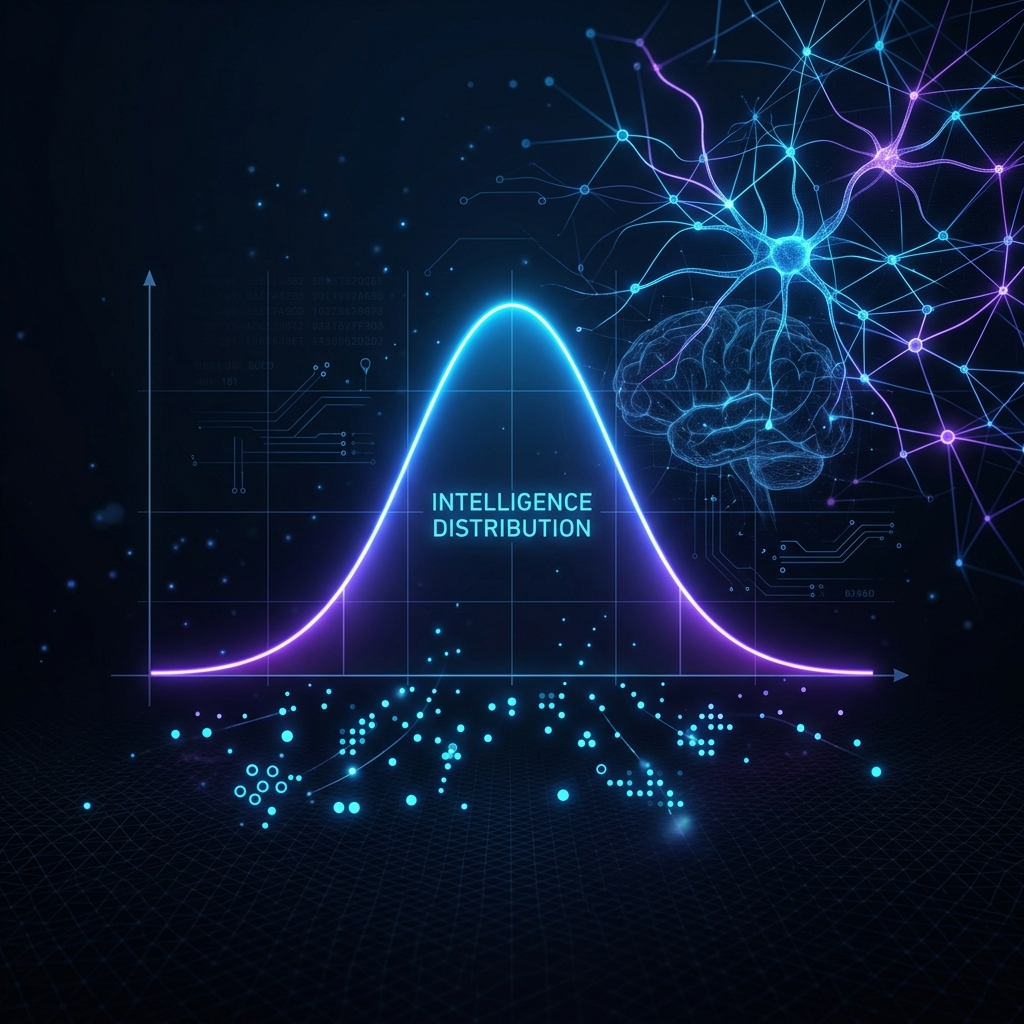
Modern standardized assessments, such as the Wechsler Adult Intelligence Scale (WAIS-IV), utilize the "deviation IQ" system, which measures a person's intellectual performance relative to their peer age group. In this psychometric model, the mean score of the population is normalized to 100 with a standard deviation (SD) of 15. Assuming a Gaussian normal distribution (bell curve), the scores are distributed systematically across the following percentiles:
| IQ Range (SD 15) | Percentile Ranking (From Top) | Clinical & Statistical Classification | Estimated Prevalence |
|---|---|---|---|
| 130 or Above | Top 2.2% | Very Superior (Mensa Eligibility / Gifted) | Approx. 1 in 50 people |
| 120 to 129 | Top 2.3% to 8.9% | Superior (High Professionals / Elite Universities Average) | Approx. 1 in 11 people |
| 110 to 119 | Top 9.0% to 25.2% | High Average | Approx. 1 in 4 people |
| 90 to 109 | Top 25.3% to 74.7% | Average (Encompasses ~50% of the population) | Approx. 1 in 2 people |
| 80 to 89 | Top 74.8% to 90.9% | Low Average | Approx. 1 in 4 people |
| 70 to 79 | Top 91.0% to 97.7% | Borderline (Grey Zone Cognitive Profile) | Approx. 1 in 11 people |
| Below 70 | Bottom 2.2% or lower | Extremely Low (Intellectual Disability Range) | Approx. 1 in 50 people |
Crucially, deviation scores depend heavily on the standard deviation (SD) value used. The clinical Wechsler standard is set to SD 15, whereas certain older assessments or public tests employ SD 24 (Cattell scale). An IQ of 148 on the SD 24 scale translates mathematically to the exact same percentile as an IQ of 130 on the SD 15 scale (both representing the top 2% boundary). Comparing direct scores without identifying the underlying standard deviation yields statistically invalid conclusions.
2. Deconstructing the Reality of IQ 120 and IQ 130
As scores scale higher, the brain's information-processing strategy shifts. In terms of day-to-day work, study, and communication, a notable cognitive boundary exists between the levels of IQ 120 and IQ 130.
📊 The IQ 120 Profile: The Superior Executive Executor
Individuals in the top 9% (IQ 120) possess exceptional capability in organizing data, applying logical reasoning, and constructing robust hypotheses. In society, this tier aligns with the average score of students at competitive universities, physicians, management consultants, and quantitative financial analysts.
- High Learning Efficiency: They easily grasp new paradigms, quickly memorize structural procedures, and draw upon their Crystallized Intelligence (Gc) database to execute demanding intellectual tasks with high accuracy.
- Seamless Alignment: Since their gap with the baseline population (IQ 100) is within 20 points, they share standard communication baselines. They are frequently perceived in business settings as highly articulate, reliable, and logical leaders.
👑 The IQ 130 Profile: The Parallel-Processing Synthesizer
Scoring in the top 2.2% crosses the eligibility threshold for high-IQ societies like Mensa. At this level, cognitive processes often bypass step-by-step linear logic, shifting toward parallel processing where complex variables are synthesized intuitively.
- Superior Fluid Intelligence (Gf): When tackling novel matrix reasoning puzzles or mathematical patterns, their Working Memory capacity and neurological speed process the relationships so rapidly that the answer presents itself as a visual gestalt.
- Asynchronous Development and Sensitivity: High-IQ profiles are frequently prone to Overexcitabilities (OE)—a neurological sensitivity to sound, visual stimuli, emotional environments, or logical inconsistencies. Because their minds process variables at extreme speeds, they often skip logical transition phases in speech. This can lead to conversational gaps where their peers find the jump in logic confusing, creating a sense of isolation in traditional organizational structures.
3. Academic Hypotheses Behind Japan's Average IQ of 105
In international cross-cultural research, such as the global compilations by psychologist Richard Lynn, the national average IQ in Japan is measured at approximately 105. This phenomenon is explained by several mutually reinforcing environmental and structural dynamics:
📚 Homogeneous Basic Education Infrastructure
Japan has maintained high literacy rates and uniform educational quality across regions since the standardization of compulsory education. Early academic conditioning in numeracy, logic exercises, and systematic puzzle solving drives active prefrontal cortex development during childhood, hoisting the population-wide intellectual baseline.
🧩 Orthographical Demands of Kanji Characters
Written Japanese requires the brain to decode semantic Kanji symbols in parallel with phonetic Kana characters. Neurologically, processing ideographic script exercises visuo-spatial networks, which strengthens the visuo-spatial sketchpad component of memory. This constant orthographical training may directly boost fluid intelligence and visual-spatial reasoning metrics.
📈 The Flynn Effect and Physiological Stability
The Flynn Effect describes the observed rise in standardized IQ scores over successive generations. Post-war modernization in Japan led to dramatic improvements in child nutrition, preventative healthcare, and information accessibility. These factors optimized physical brain development (myelination), allowing individuals to achieve their maximum genetic cognitive potential.
4. Neuroscientific Habits to Maintain and Optimize Cognitive Performance
Cognitive capability is not a fixed lifetime index. Advances in neuroscience have established that the brain reorganizes its neural connections throughout adulthood via neuroplasticity. The following habits are scientifically proven to sustain and enhance cognitive metrics:
- Aerobic Exercise and BDNF Release: Consistent moderate aerobic exercise (such as interval running or cycling) increases blood flow to the prefrontal cortex and stimulates Brain-Derived Neurotrophic Factor (BDNF). This protein drives neurogenesis and boosts the retention rate of new skills.
- Protecting the Working Memory: Sleep deprivation and chronic multitasking degrade the executive function network. Getting 7 to 8 hours of sleep and adopting single-tasking routines prevents executive fatigue and keeps your mental workbench clear.
- Engaging with Novel Complexity: Solving novel visual-spatial puzzles, learning a new programming language, or playing a complex instrument forces the dorsolateral prefrontal cortex (DLPFC) to forge new synaptic connections, preventing cognitive decline.
Where does your brain stand in terms of processing speed, spatial logic, and working memory? The precision test on this portal evaluates fluid intelligence without cultural biases, scoring your metrics based on statistical standard deviations. Take the test to map your cognitive strengths and discover your unique intellectual profile.
Cognitive Science Q&A (FAQs)
Q.Is IQ entirely determined by genetics?
Behavioral genetics suggest that genetic factors account for approximately 40% of IQ variance in childhood, rising to 60-80% in adulthood. However, the remaining portion is determined by environmental factors, including education, nutrition, cognitive stimulation, and health habits. Furthermore, while fluid intelligence (Gf) naturally declines with age, crystallized intelligence (Gc)—which represents acquired wisdom, vocabulary, and experience—can continue to improve well into your 60s and 70s, meaning lifelong intellectual habits directly shape cognitive quality.
Q.Why can someone with a high IQ (120+) struggle with professional performance?
Professional execution requires more than raw cognitive processing speed (IQ). It relies on executive function (planning, emotional regulation, and execution) and Emotional Intelligence (EQ). In clinical profiles, a significant discrepancy between indices—such as a very high Verbal Comprehension Index (VCI) but a low Processing Speed Index (PSI)—can make it difficult to organize and execute tasks efficiently, despite possessing superior intellectual understanding.
Q.How is it possible for Japan's average IQ to be 105 if the standard baseline is 100?
An IQ score is normalized to 100 within a specific local standardization sample. However, when researchers compare cognitive metrics across different nations using a single unified scale (such as standardizing global samples against a European or international norm), East Asian populations, including Japan, consistently demonstrate average deviation scores hovering around 105.
Academic References (Citations)
- Lynn, R., & Vanhanen, T. (2002). IQ and the Wealth of Nations. Praeger.
- Flynn, J. R. (1987). Massive IQ gains in 14 nations: What IQ tests really measure. Psychological Bulletin, 101(2), 171-191.
- Neisser, U., et al. (1996). Intelligence: Knowns and unknowns. American Psychologist, 51(2), 77-101.
- Wechsler, D. (2008). Wechsler Adult Intelligence Scale—Fourth Edition (WAIS-IV). NCS Pearson.
Cognitive Diagnostic Engine
Ready to measure your cognitive balance scientifically?
IQ Lab evaluates your skills across 5 core cognitive domains from a randomized 300-question pool, generating high-precision profiles and personal diplomas completely free.