
Cognitive Profiles / Scientific Article
Mensa and Giftedness: Inside the Top 2% Cognitive Profiles
A look into Mensa entry criteria, the neurological profile of gifted individuals (FSIQ > 130), and the developmental realities of cognitive variance.
Mensa, the high-IQ society founded in 1946, restricts membership to those scoring in the top 2% of standard intelligence tests. However, possessing a high-g profile (IQ 130+) is not merely about visual puzzle speed—it entails a structurally unique nervous system.
1. Percentile and Deviation Metrics of High IQ
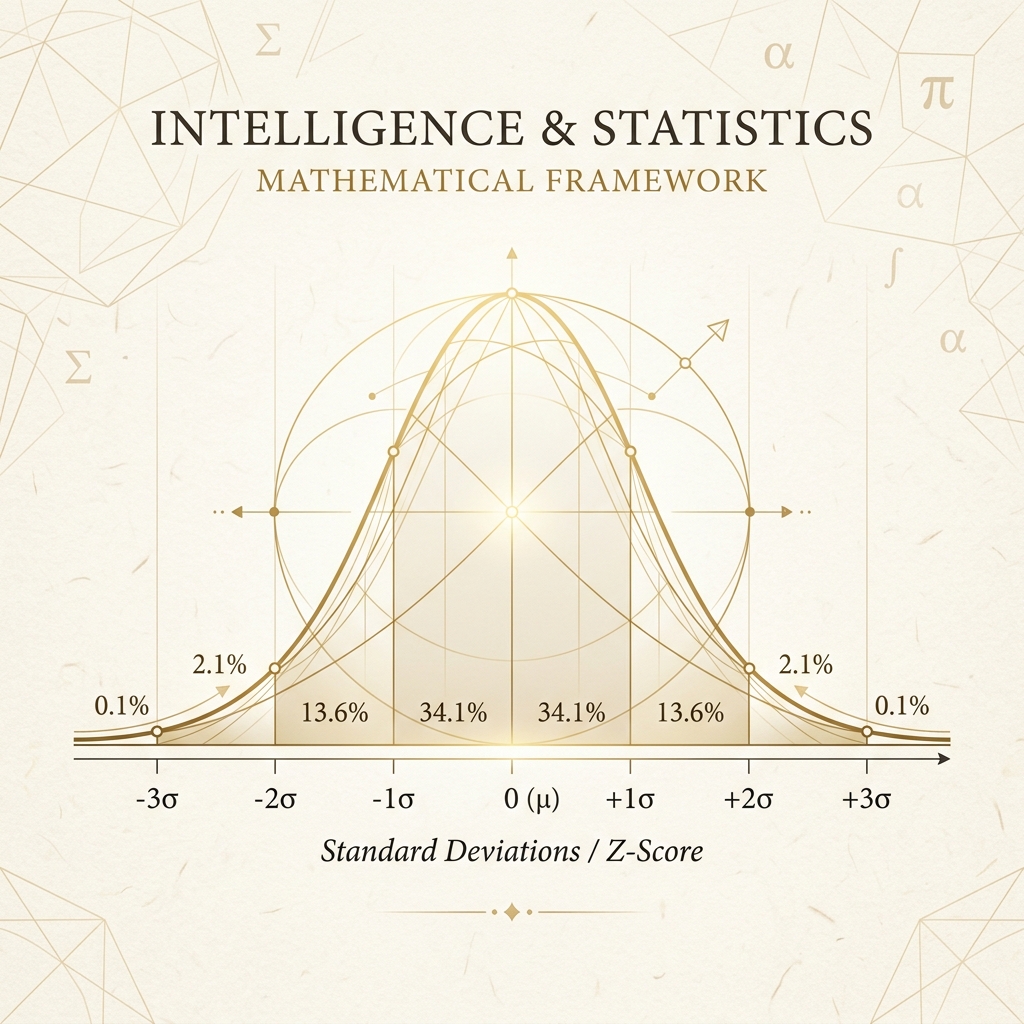
The cutoff for Mensa is the 98th percentile. In terms of standard deviation:
- SD15 Scale: Requires a score of 131 or higher (WAIS standard).
- SD24 Scale: Requires a score of 150 or higher (Cattell standard).
Both scores reflect the exact same relative position in the population distribution (1 in 50 people).
2. Neuropsychology of the Gifted Mind
Neurologically, gifted brains show hyper-connectivity between prefrontal networks and sensory regions. This generates Kazimierz Dabrowski's famous "Overexcitabilities" (OEs)—extreme intellectual, emotional, imaginational, sensory, and psychomotor sensitivity. Gifted adults do not just think faster; they process visual, conceptual, and emotional variables with profound intensity.
Cognitive Science Q&A (FAQs)
Q.Does high IQ guarantee career success?
No. Research by Lewis Terman shows that above IQ 120, career success correlates heavily with conscientiousness, social intelligence, and metacognitive control rather than raw IQ points.
Q.What is twice-exceptional (2E)?
It describes individuals who possess high giftedness alongside a processing bottleneck like ADHD, dyslexia, or high-functioning autism.
Academic References (Citations)
- Dabrowski, K. (1964). Positive Disintegration. Little, Brown & Co.
- Terman, L. M. (1925). Genetic studies of genius. Stanford University Press.
Cognitive Diagnostic Engine
Ready to measure your cognitive balance scientifically?
IQ Lab evaluates your skills across 5 core cognitive domains from a randomized 300-question pool, generating high-precision profiles and personal diplomas completely free.